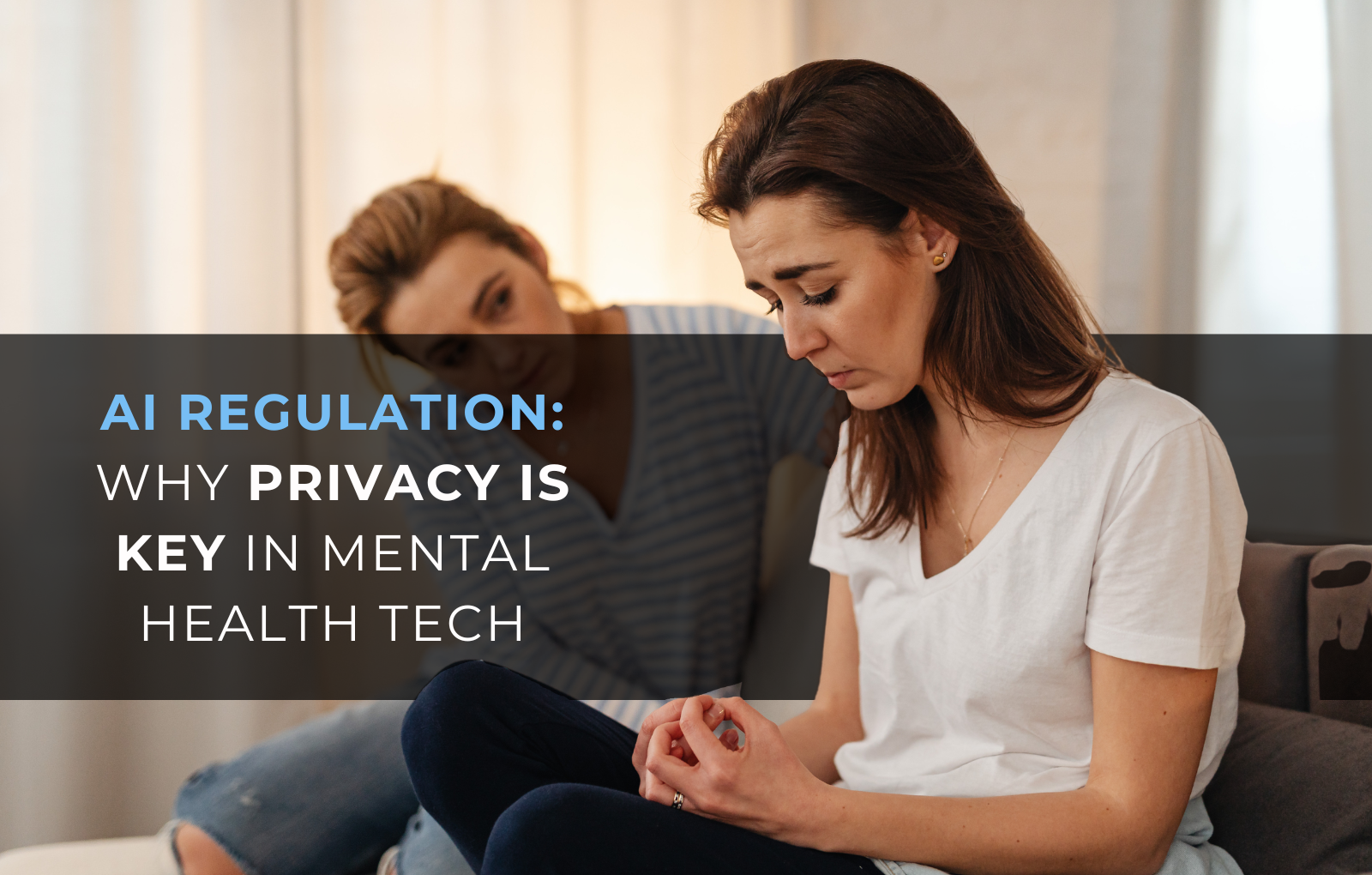
Artificial Intelligence has officially moved from novelty to necessity. In 2025, governments around the world are no longer asking whether AI should be regulated; the question is how.
Across industries, AI tools are transforming productivity, personalization, and prediction. Yet as algorithms shape everything from hiring decisions to medical conversations, regulation is becoming the next competitive advantage.
For mental health technology, this shift is especially significant. Unlike finance or retail, the stakes are not only financial; they are deeply personal. AI systems that process emotional language, journal entries, or mood data are touching some of the most sensitive information a person can share.
That’s why at Pocket Mate, we believe strong AI regulation is not a hindrance to innovation; it’s a foundation for trust.
The United States still lacks a single, comprehensive AI law. Instead, it relies on existing sector rules and state-level initiatives. Agencies such as the Federal Trade Commission (FTC) and Federal Communications Commission (FCC) have started applying older laws to new AI scenarios:
Meanwhile, states are leading the charge. The Colorado AI Act, effective in 2026, is the first comprehensive U.S. AI law. It requires developers to evaluate bias, manage risks, and disclose when automated systems influence key decisions like healthcare access. California follows with transparency bills that demand disclosure of training data and user notifications when content is AI-generated.
This patchwork approach is messy, but it’s progress. It signals that AI accountability is no longer optional, especially in sectors handling personal or clinical data.
Across the Atlantic, the EU AI Act has already taken effect, marking the world’s first binding, risk-based AI regulation. High-risk systems, including those that affect access to healthcare, must meet strict requirements for transparency, data governance, human oversight, and security.
Together, the U.S. and EU are shaping a global consensus:
AI must be safe, fair, and explainable.
For mental health technology, this means developers must design for privacy and psychological safety from the ground up.
Mental health data are unlike any other category of information. A journal entry, a midnight voice note, or a conversation about anxiety can reveal patterns of thought, relationships, and even trauma. These details fall under Protected Health Information (PHI) in the U.S. and Special Category Data under the EU’s GDPR Article 9.
The challenge? Even when personal identifiers are removed, language patterns can still make a person identifiable.
That’s why de-identification alone is no longer enough; security, anonymization, and ethical intent must all work together.
For AI systems in mental health, transparency must be absolute. Users need to know what the system is and what it is not.
This distinction builds trust. And trust is what keeps people coming back, not just clever code.
| AI Listener’s approach is clear: |
|---|
| We’re here to support, not to diagnose. Your information is safe. We do not save any personal information. AI Listener is here to help you reflect and regulate. If you are in crisis, you should always reach out for human help. |
When clinicians evaluate digital tools today, privacy is no longer a compliance checkbox; it’s a marker of professional integrity.
Under HIPAA, healthcare providers and their partners must implement administrative, physical, and technical safeguards for PHI. Recent industry guidance emphasizes the need for strong user verification to prevent unauthorized access.
At Pocket Mate, we elevate security by focusing on biological keys and physical access controls. Our technical safeguards include Face ID authentication for user entry, ensuring that PHI can only be accessed by the registered individual. This is paired with a feature that empowers users with the right to erase their personal chat data, defining the lifespan of their emotional reflections.
Some worry that regulation will slow AI innovation. In reality, it’s doing the opposite. Clear rules create confidence for investors, clinicians, and users alike. When patients trust that their data is safe, they engage more freely. When clinicians trust AI outputs, they use them more effectively.
Regulation also compels better science. Bias testing, risk assessment, and documentation requirements ensure AI models perform consistently across populations. In mental health, that means tools that understand diverse speech patterns, cultural contexts, and coping styles.
By building for compliance now, companies prepare for the next generation of clinical collaboration, where AI assists therapists responsibly instead of replacing them.
The phrase “Transparency is Key” isn’t just a slogan; it’s a clinical ethic. Patients don’t fear technology as much as they fear the unknown. When apps are clear about what they do, what they don’t, and how they handle data, users feel respected and in control.
AI Listener embeds transparency into every interaction:
Transparency translates to safety, and safety builds trust.
The next 18 months will define AI compliance globally. By 2026:
Clinicians and mental health organizations can prepare by asking vendors seven key questions:
If any answer is vague, that’s a red flag.
The mental health field has always been guided by two principles: do no harm and protect confidentiality. AI does not erase these values; it extends them. Regulation ensures technology stays aligned with human ethics. Empathy ensures it remains compassionate in practice.
AI Listener stands for both. We believe that with proper oversight and transparent boundaries, AI can make mental health support more accessible and less stigmatized for millions. But it must earn that trust every single day.
AI Listener operates on a simple principle: when you trust the system, you use it more openly, and that’s where it starts to help. To earn that trust, we provide the highest level of security and transparency:
This is how we turn regulation into reassurance by design, not just compliance.
The coming year will define how AI regulation is implemented and how AI integrates with human care. Governments are writing laws, companies are building guardrails, and users are demanding accountability. That’s a good thing.
For mental health tech, the path forward is clear: privacy is not negotiable, safety is not optional, and transparency is the standard.
At Pocket Mate, we don’t see regulation as a barrier; we see it as a promise to our users. A promise that their stories will be protected, their data will be respected, and their journey toward mental clarity will always remain their own.
Note: AI Listener is not a crisis center. If you are in danger or need immediate support, please contact the National Suicide Crisis Prevention Hotline by calling 988, or reach out to the National Suicide Prevention Lifeline at 800-273-8255, or text 741741 for the Crisis Text Line.
Copyright © 2025 Pocket Mate AI™