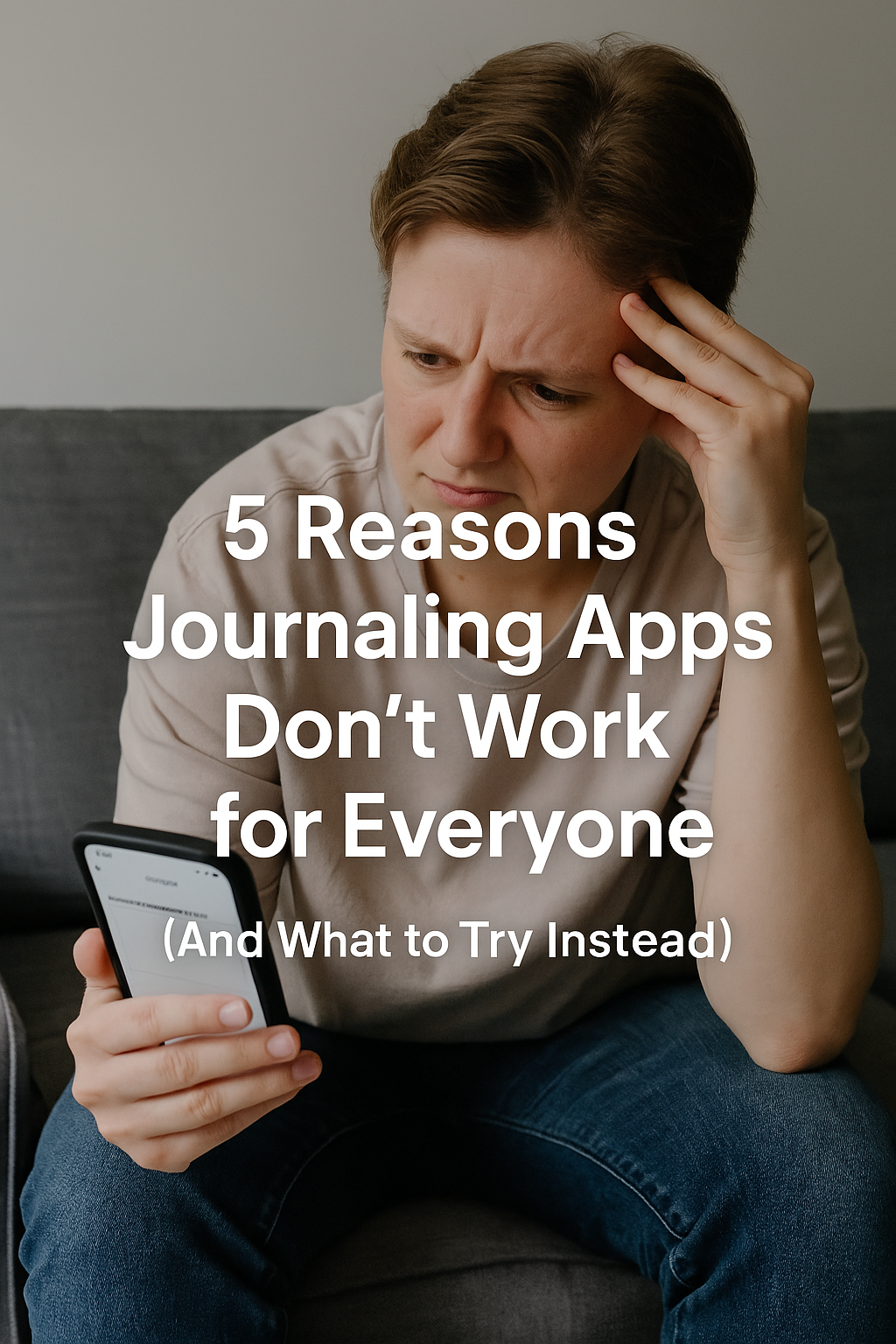
Journaling is often hyped as a go-to self-care tool. But here’s the truth: it doesn’t work for everyone—and that’s okay.
If you’ve ever opened a journaling app and felt stuck, bored, or just more overwhelmed than before, you’re not alone. This blog explores why journaling apps might not be helping you, and what other tools could work better based on your emotional needs.
The benefits of journaling are well-documented: it can improve mood, reduce stress, and help process emotions. But here’s the catch—those benefits depend on how you journal and whether the format fits your personality and needs.
For some, writing is freeing.
For others, it’s frustrating, repetitive, or even triggering.
Most journaling apps offer a blank space, maybe a prompt or two, and… that’s it.
If you're feeling overwhelmed, anxious, or just don’t know where to start, a blinking cursor can feel like pressure, not relief. Other reasons people abandon journaling apps include:
Journaling is one-way. It doesn’t talk back, guide you, or offer real-time support. And when emotions are high, that silence can feel isolating.
What many people need is empathy, encouragement, or just someone (or something) to say, “Hey, I hear you.”
If writing alone doesn’t help, try more interactive or conversational methods like:
The key is to find what actually helps you express, process, and feel heard.
If journaling feels like homework, stop forcing it. Self-care should never feel like a burden.
Instead, ask yourself:
👉 “What would help me feel lighter right now?”
Maybe that’s talking, laughing, venting, moving, or just being still for a moment. Give yourself permission to find your own version of emotional release.
If you’ve tried journaling and it didn’t click, you might just need something more alive. That’s where Pocket Matecomes in.
It’s not a journaling app—it’s a conversation-based support tool that:
You don’t have to think of the right words or carry the weight alone. Pocket Mate is there to talk with you—not at you.
Bottom Line: Journaling Isn't the Only Way to Heal
There’s no one-size-fits-all when it comes to emotional wellness. If journaling apps haven’t worked for you, that doesn’t mean you’re doing it wrong. It means your mind is asking for a different kind of outlet—and that’s valid.
Try something new. Talk it out. Express it differently.
And most importantly, don’t give up on yourself.