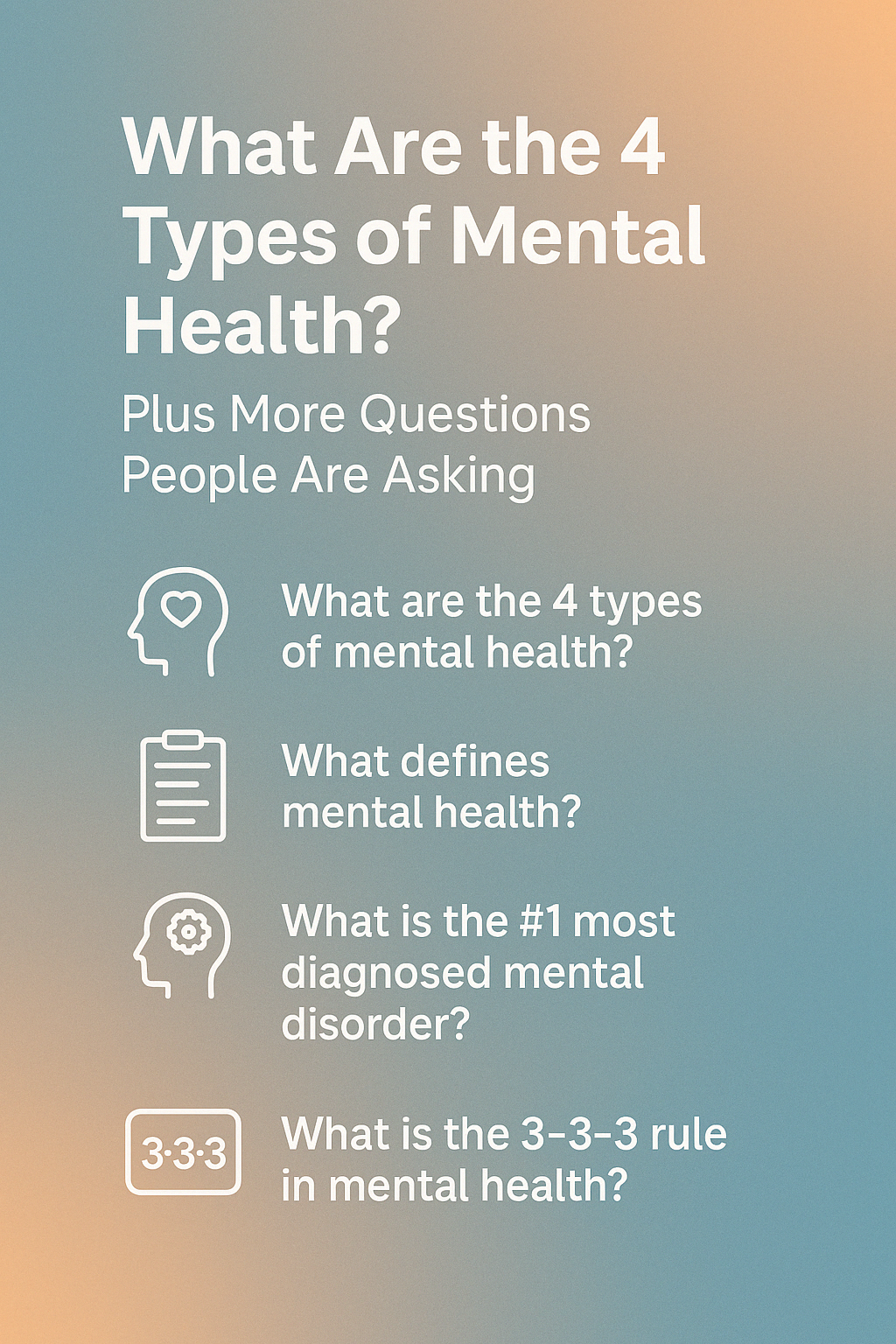
Mental health covers a wide range of experiences, and professionals typically group it into four key categories:
Each type affects the others—just like physical health and emotional health are deeply connected.
Mental health is more than just the absence of a mental disorder.
It includes:
Good mental health doesn’t mean feeling happy all the time—it means having the tools to navigate both joy and difficulty with balance.
As of recent data, anxiety disorders are the most commonly diagnosed mental health condition worldwide.
This includes:
Anxiety can impact sleep, concentration, and relationships—but it’s also one of the most treatable mental health challenges with therapy, tools, and support.
The 3-3-3 Rule is a simple grounding technique often used for anxiety or panic:
It helps shift your focus from racing thoughts to the present moment. Many people use it during stress, overwhelm, or to calm down after triggers.
Mental health can feel complicated—but it starts with small understanding.
Whether you're curious, learning, or needing support, asking questions is the first step toward emotional clarity. There’s no shame in wondering. Only strength in seeking.