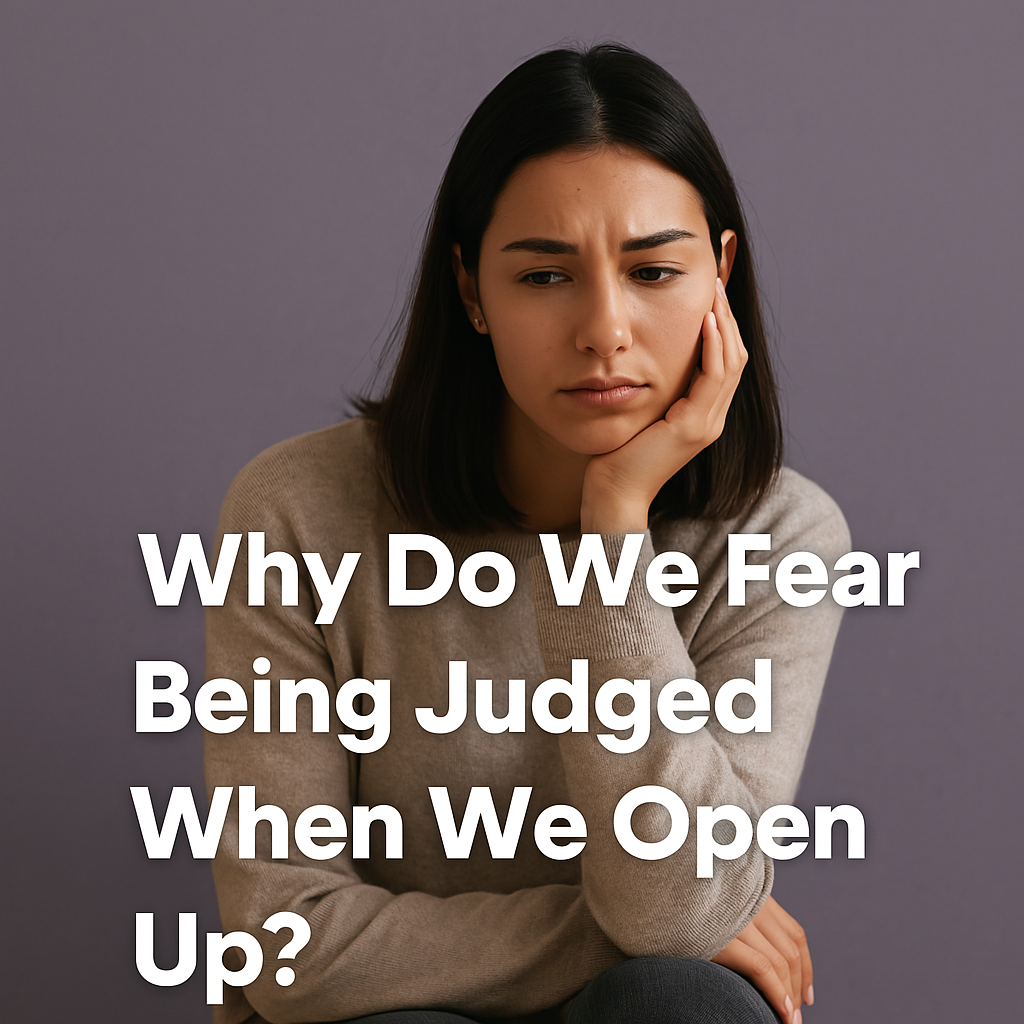
Let’s be honest—opening up is hard.
Even when you want to talk about how you feel, something inside holds back.
And that “something” is often fear.
Fear of saying too much.
Fear of being misunderstood.
Fear of being judged.
This post is about understanding that fear—where it comes from, how it shows up, and how to start releasing it, little by little.
Because vulnerability is a risk.
When you share what’s on your heart, you’re giving someone access to a part of you that feels tender, exposed, and unpolished.
You’re saying: “Here’s something real.”
And the truth is, that takes courage—especially if you’ve been hurt before.
When you expect to be judged:
Judgment doesn’t just sting—it rewires how safe we feel being seen.
1. We’ve Been Rejected Before
Maybe someone ignored your feelings. Laughed. Changed the subject. That one moment taught your brain: “Don’t do that again.”
2. We Carry Shame We’ve Never Said Out Loud
When a feeling or truth feels “too much,” we assume others will think so too. But unspoken shame grows stronger in silence.
3. We Were Taught to Stay Quiet
Whether from family, culture, or childhood dynamics—many of us were conditioned to bottle things up to keep the peace or appear strong.
4. We Worry About Being a Burden
Even when someone says “I’m here for you,” we hesitate. What if they’re secretly annoyed? What if we’re “too emotional”?
5. We Fear Losing Control of the Moment
Once you start talking, emotions might rise. You might cry. Stumble. Ramble. That unknown makes us freeze up before we even try.
Start small. You don’t have to pour your whole story out. Try:
Choose safe people. Emotional safety isn’t about perfection—it’s about feeling seen without fear.
Use a buffer. If talking directly feels too intense, try writing a message, using a mental health app, or voice-noting first.
First: it wasn’t your fault.
Judgment says more about someone’s capacity than your courage.
If you’ve been hurt by past reactions:
Healing happens in safe spaces—even digital ones.
You’re not too much.
You’re not weak for feeling deeply.
And you’re not alone in wanting to be heard without being judged.
The fear is real—but so is your ability to move through it, one honest word at a time.